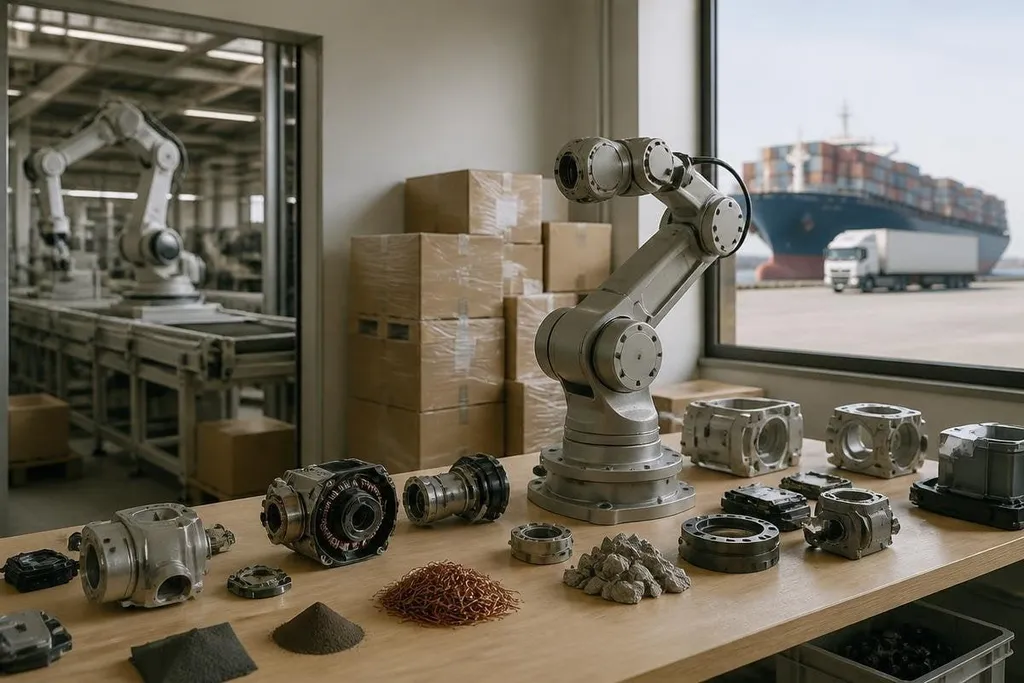
A robot’s environmental cost starts before it reaches a factory, lab, or home. The final figure depends on its materials, manufacturing, transport, working life, repairs, and disposal.
A short way to read the issue:
- The robot’s footprint begins with mined materials, processed parts, and factory energy.
- A long service life can change the balance, but only if the robot keeps working and can be repaired.
- Buyers need supplier data, energy use, repair plans, and end-of-life details before making a fair comparison.
Materials come before software
A robot is a physical product. Its body, motors, batteries, sensors, control boards, cables, covers, and grippers all require materials and manufacturing steps. Those parts also arrive from suppliers before final assembly begins.
The software may receive most of the attention, but it doesn’t erase the hardware footprint. A robot with more sensors, heavier actuators, or a larger battery has more physical content to make, ship, maintain, and replace.
That makes a bill of materials useful. It can show which parts contain metals, plastics, batteries, or electronic boards, along with the parts most likely to need replacement. Without that record, a buyer can’t tell if a small design change cuts material use or only moves the burden to another supplier.
Factory energy and transport
Manufacturing uses energy at several points. Suppliers make components, factories assemble them, and testing checks whether the finished robot works safely. Packaging and transport add more energy use before deployment.
The distance a robot travels matters, but it isn’t the only question. A local final assembly site can still depend on parts made in several other countries. A useful review must follow the parts, not stop at the address on the shipping label.
A robot’s material cost needs context from its working life. Robot24.com's robotics deployment coverage can add a named site, task, and date to the machine record, so you can compare what went into building it with the work it does. Runtime is next, because power use shapes the footprint long after assembly.
Runtime is only half the question
A robot’s operating energy is easier to discuss because it can be measured at the point of use. Yet a runtime figure alone says little about the full cost of ownership. You also need to know how often the robot runs, what load it carries, how much charging equipment it needs, and how its batteries age.
A robot that replaces repeated manual transport may avoid the need for another machine or vehicle. A robot that spends most of its life switched off carries its manufacturing footprint without much work to spread it across.
Service life matters just as much. A repairable arm, mobile base, or gripper can keep its original parts in use. If a failed sensor forces a full machine replacement, the discarded hardware becomes part of the environmental account.
Disposal starts at the design stage
End-of-life planning belongs in the first design review. Parts need clear removal paths, batteries need safe handling, and electronic boards need a route into proper recycling or recovery systems.
Design teams can also record which parts are shared across models. Common motors, sensors, or battery packs may make repair and spare-parts storage easier, though the actual result depends on how long those parts remain available.
I'd judge a robot’s environmental case by its years of useful work, not by its launch-day specification sheet.
A buyer's environmental checklist
Ask the supplier for:
- A bill of materials that identifies batteries, electronic boards, metals, and major plastics.
- Factory energy data and the locations of final assembly and major component production.
- Measured energy use during normal operation, charging, standby, and safety stops.
- Expected service life for batteries, motors, sensors, and end effectors.
- Repair instructions, spare-parts availability, and software support periods.
- A written plan for battery handling, recycling, and machine disposal.
The answers may be incomplete. That is still useful information: missing data prevents a fair comparison and should lower confidence in any environmental claim.
For now, the practical test is simple. Ask what the robot is made from, how much work it will do, how long it can be repaired, and where its parts go after service ends. Until a supplier can answer those questions, its environmental cost remains an estimate rather than a result.